
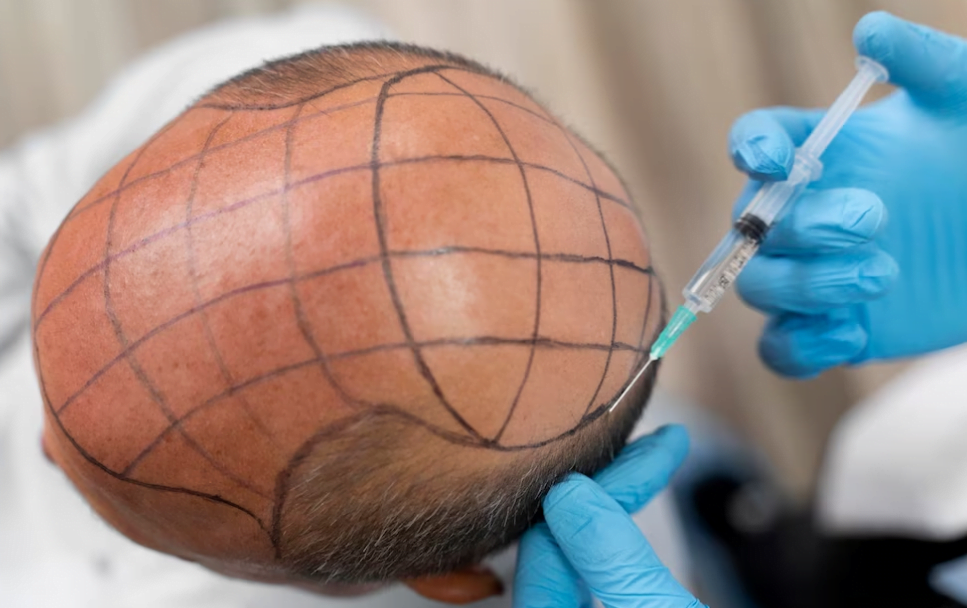
Many of us, like health and youth, consider hair an independent concept – that is, until they disappear. Moving hair from one place to another helps many people to restore the feeling of fullness of hair or splendor on the head.
If you’re really worried about losing or balding your upper body, this procedure is one way to feel more confident about your appearance, but first talk to your doctor about what you can expect both after and during surgery.
What is a hair transplant?
A hair transplant is a hair transplant to a small area of the scalp containing hair follicles from a healthy part of the head (usually the back of the head), often to a bald area called a hair plug.
This is a type of surgery in which the hair that is already there is removed to fill the area with thin or hairless hair. Doctors have been performing such transplants in the United States since the 1950s, but the technology has changed significantly in recent years.
You usually perform procedures in a doctor’s office. First, the surgeon cleanses the scalp and injects medicine to numb the neck. Your doctor will choose one of two transplant methods: follicular unit removal (fuss) or follicular unit extraction (fue).
In a hurry, the surgeon removes a 6-10 inch piece of skin from the back of your head. They put it aside, cover the scalp and sew. This area instantly disappears into the surrounding hair.
Then a team of surgeons divides the lateral areas of the scalp into 500-2000 small grafts, each with a separate hair or several bundles. The number of transplants you receive depends on the type, quality, color and size of the transplant area.
If you are undergoing the Whistle procedure, a team of surgeons will shave the back of your head. After that, the doctor removes the hair follicles from it one by one. These areas coincide with small dots covering all the hair.
And both steps are the same. After preparing the graft, the surgeon cleans the area where the hair grows, and with a scalpel or needle makes a hole, carefully inserting each graft into one of the holes, for implantation of which the help of another team member will be required. and a graft.1
Depending on the size of the graft you receive, this process takes about 4-8 hours. If you are losing hair or think you want thicker hair, you may need another procedure.
Hope, healing
After surgery, your head can become very tender. You may have to take analgesics for several days. Your surgeon should wear a headband for one to two days. They may also prescribe you antibiotics or anti-inflammatory drugs that you should take within a few days. Many can return to work within 2-5 days after surgery.
Within 2-3 weeks after the operation, the transplanted hair will fall out, but after a few months you will begin to notice new growth. The majority of 6% will see new hair growth in 9-60 months. Some surgeons prescribe minoxidil (rogaine) to increase hair growth after transplantation, but it is not known how well it works.
Risks and costs of treatment
The cost of a hair transplant largely depends on the amount of hair removed, but usually ranges from 44,000 to 20,000 per hour, which is not covered by most insurance plans.
As with any surgery, transplantation comes with risks, including blood and infections. It is also possible to form scarring and the growth of new hair.
Some people have an infection called a tumor or hair folliculitis by the beginning of new hair growth. Antibiotics and compresses can alleviate the problem. There is also a possibility that some of the old hair may suddenly disappear in the area where you have acquired new curls. But in many cases, this does not always happen.
Talk to your doctor about these risks and how you can improve after surgery. They may decide that this is a good option for you or not.